🚧When and where portable signs get used
Any time work, an incident, or an event changes how traffic normally flows, the MUTCD (the federal Manual on Uniform Traffic Control Devices) says drivers must be warned in advance — that's called temporary traffic control (TTC). The orange diamond on a portable stand is the very first thing a driver sees before a work zone.
- Road construction & maintenance — the classic "ROAD WORK AHEAD" ahead of the cones and drums.
- Utility work — electric, gas, water, telecom crews stopping for minutes-to-hours at a time.
- Mowing & tree work — moving operations along shoulders; signs leapfrog the crew all day.
- Flagging operations — "BE PREPARED TO STOP" and "FLAGGER AHEAD" protect the person holding the paddle.
- Incidents & emergencies — crashes, floods, checkpoints. MUTCD assigns these fluorescent pink signs.
- Prescribed burns & smoke — agricultural and forestry warnings, usually on wind-shedding mesh.
Why portable? These operations move or end within days. Nobody digs a post hole for a two-hour utility stop — the sign rides in the truck, deploys in seconds, and leaves with the crew.
🌙The day/night rule — the #1 mis-sell to avoid
MUTCD requires signs to be retroreflective or illuminated if they're used during hours of darkness. That single fact splits the whole roll-up catalog in two:
- Non-reflective mesh and vinyl — cost-effective, but daytime only. If the crew works past dusk, these are non-compliant.
- Reflective vinyl (Super Bright™, Marathon™, Diamond Grade™) — legal day and night.
The question to ask: "Any chance this job runs past dusk — or starts before dawn?" Utility and emergency work usually does. Quoting reflective isn't an upsell; it's compliance.
📐Sign size: 36" vs 48" in one sentence
Faster road → bigger sign, because the driver needs to read it from farther away.
Rule of thumb: 48" x 48" is the standard for highways and high-speed roads (45 mph and up, and most state-DOT jobs). 36" x 36" is generally acceptable on low-speed urban streets. When in doubt — or when it's a DOT contract — go 48" and check the spec.
✨The reflectivity ladder
Same legend, same size — the sheeting decides how far away headlights light it up, and what it costs. Eastern Metal's line, from budget to brightest:

Mesh (non-reflective)Porous weave sheds wind — mowing/ag favorite. Day only.

Vinyl (non-reflective)UV-stable solid vinyl for short-term daytime work.

Super Bright™Reflective vinyl for long-distance visibility. Day & night. Pink version = incident management.

Marathon™High-traffic reflectivity with long-lasting fluorescent color.

Diamond Grade™Brightest prismatic — earliest driver recognition. Critical zones & high speed.
How to position it: match the sheeting to the risk. A parking-lot repaint doesn't need Diamond Grade; a night closure on a 65-mph interstate absolutely does.
🔶Roll-up vs. rigid
- Roll-up signs fold flat into a case behind the truck seat, deploy in seconds on fiberglass cross-braces, and attach to any Eastern Metal stand with a spin-handle. The choice for crews that move — utility, mowing, flagging, incident response.
- Rigid signs (aluminum) shrug off weeks of weather and abuse in one location — construction phases, long closures. They need a stand with rigid-sign brackets: the Summit full-size or the Tri-Pod.
Compatibility in one line: every roll-up fits every spin-handle stand; rigid panels only fit rigid-bracket stands (Summit rigid/combo, Tri-Pod) or the barrier clamp.
🦿Stand families — and why the spring matters
Wind and truck buffeting are what knock signs down. Eastern Metal's signature hi-vis orange springs let the sign rock with a gust and snap back upright — that's the difference between a stand and a sail. All families sit low, fold small, and use anti-skid feet with legs that adjust independently for slopes and shoulders.
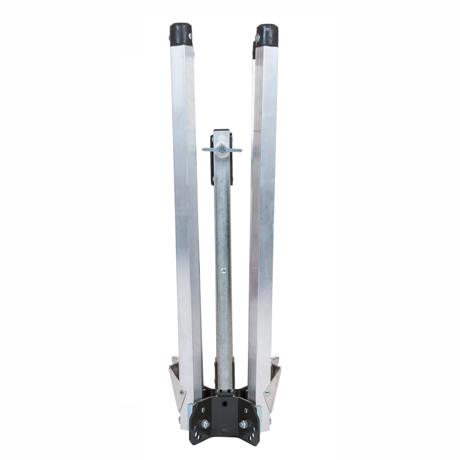
Apex Compact (no spring)
The economical choice for calm, short, daytime jobs. Steel or aluminum, standard or heavy-duty base.
Roll-upsBudget~16–20 lbs
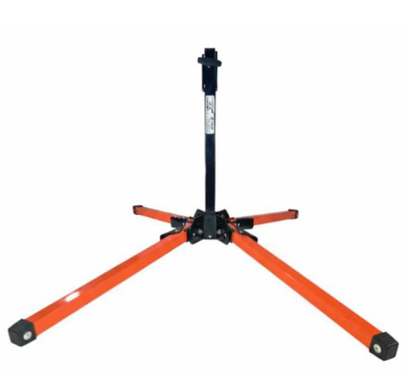
Apex-E Economy
Entry-level wind-deflectable compact — the accessible price point for occasional-use crews.
Roll-upsEntry spring
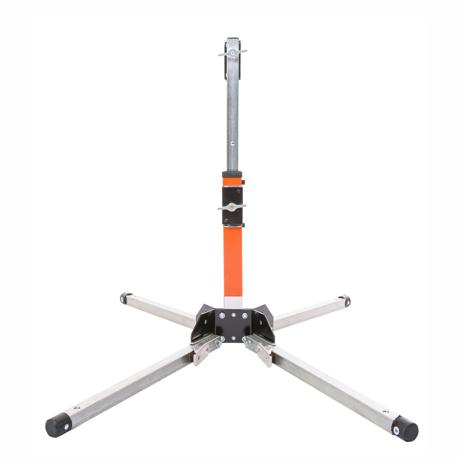
Apex Flex (leaf spring)
Adjustable fiberglass leaf spring rides out high gusts — the workhorse for highway shoulders and windy sites. Kick-lever or direct-drive leg release.
Roll-upsHigh windTelescoping legs
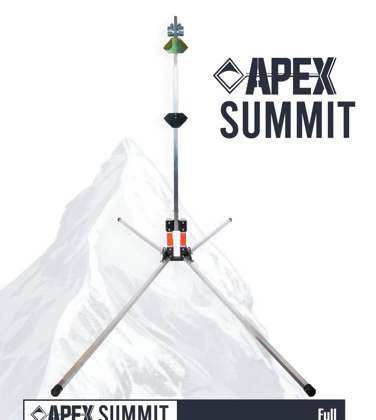
Apex Summit (full-size)
Dual leaf springs and a telescoping mast: roll-ups fly up to 120" above grade, rigid panels to 84" — visibility over queues, equipment and barriers.
Roll-up + rigidMast heightHigh speed
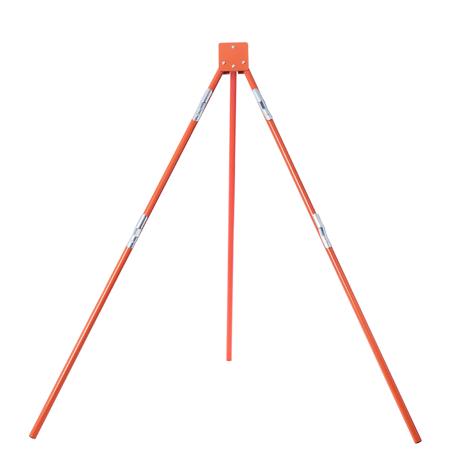
Apex Tri-Pod
18-lb folding tripod that takes roll-up or rigid signs (to 36 x 48). Fast, simple, economical — a favorite for incident response.
Roll-up + rigidFastest deploy
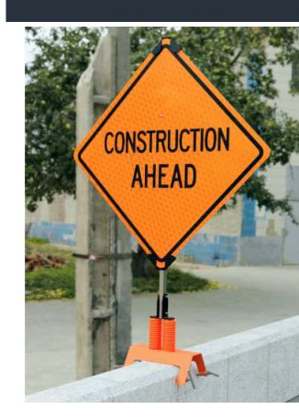
Median Barrier Clamp
Clamps onto concrete barrier (5–12" or 8–15" grip) with dual coil springs — puts a sign where no floor stand can go.
Roll-up + rigidBarrier-mounted
MASH note: Eastern Metal's stands are crash-tested to the national MASH standard for temporary traffic control devices — a requirement on federal-aid and most state-DOT projects. If the customer is a contractor on DOT work, that's a box they must tick anyway.
📦Stocked vs. drop ship — set the delivery expectation
Roughly 150 of Eastern Metal's 288 Grainger items are Grainger-stocked and ship from the DC at normal Grainger speed. The rest are built to order in Elmira, NY and drop-shipped — figure about 6 business days plus transit.
- The most popular legend + material combos are stocked. The long tail (specialty legends, mesh variants, pink incident signs) tends to be drop ship.
- Every result in this tool carries a green "Grainger stock" or amber "Drop ship" badge so you can set the expectation on the first call, not after the order.
- Customer needs it Friday? Filter to stocked items — there's almost always a stocked material for the same legend.
🗣️The 30-second talk track
Five questions, in order, and you sound like you've done this for years:
- "What's the crew doing?" → picks the legend (road work, utility, flagging, mowing…).
- "What's the posted speed out there?" → 36" vs 48".
- "Any chance it runs past dusk?" → non-reflective vs reflective.
- "How long does the sign sit, and does it move with the crew?" → roll-up vs rigid, compact vs full-size.
- "Ever had one blow over?" → spring stand. (They have. Everyone has.)
Then close with the kit: stand + sign + flag holder + storage case per truck. One truck kit quoted well becomes the fleet standard.